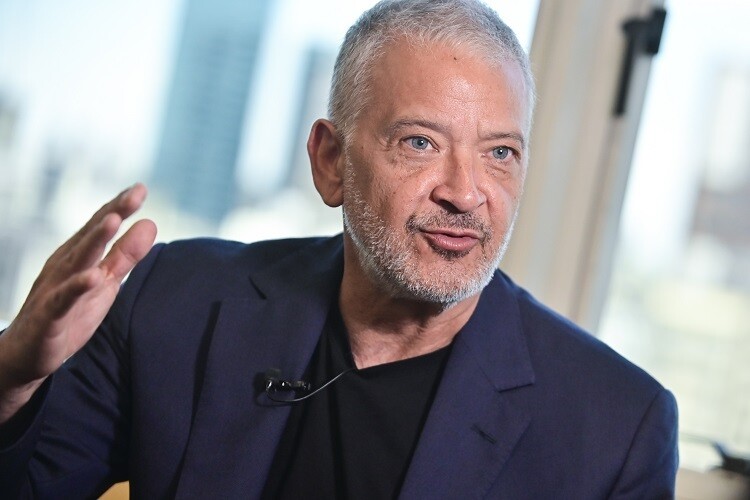
Peruvian journalist Pedro Salinas, who uncovered a network of abuse and corruption within the Christian community 'Sodalicio de Vida Cristiana' in his own country and was himself a victim, has expressed solidarity with the 43 Argentine women who have accused Opus Dei. He considers them 'a sort of modern slaves'. Salinas made this statement in an interview with EFE news agency in Buenos Aires, in connection with his participation in an international meeting on abuse within the Church. According to him, Argentina has been a strong epicenter with the case of the 43 former numeraries, who are, in practice, a sort of modern slaves within this organization. The journalist explained that the women who denounced Opus Dei for human trafficking in 2021 were recruited with promises of education and training, but ended up working for years in domestic chores without salary and under total control of their lives, with restrictions on communication and family ties. These denunciations led to a criminal investigation by the Argentine justice system - initiated in 2022 - under which Mariano Fazio, second-in-command globally of Opus Dei, was accused last July of 'human trafficking in the form of reduction to servitude'. The recruited victims were mostly minors and poor, and the objective was to force them to work without remuneration for years as domestic employees, according to the justice system. Salinas, author of 'The truth made us free. The story of abuse and the fall of Sodalicio', highlighted the importance of Francis, as leader of the Catholic Church, listening to the victims. The journalist pointed out that, despite the seriousness of the former numeraries' complaint, it is more complex for the Church to move against Opus Dei, as it has a founding saint, Josemaria Escriva de Balaguer, which 'shields the institution' and hinders any process of suppression. He recalled that Sodalicio aspired to canonize one of its main leaders, but that process was halted thanks to his own investigation, in which he determined that the candidate 'was a pederast, a sexual predator of minors'. The successor: Leo XIV Salinas recognized the role of the new Pope Leo XIV, secular name Robert Francis Prevost, in the fight against abuse within the Church. According to him, Prevost had a 'highly proactive, though silent' role, first as bishop of Chiclayo (Peru), then as a member of the Peruvian Bishops' Conference, and later as cardinal prefect of the Dicastery for Bishops, which was decisive for the dissolution of Sodalicio. This October, Salinas had a private audience with the Pope and another with the board of ECA Global (Ending Clergy Abuse), an international organization of victims, which he described as 'highly positive'. This organization was precisely in charge of organizing a summit in Buenos Aires this week to debate and denounce abuse within the Church. Leo XIV 'will be a continuer of the master lines that Francis had already drawn on synodality, abuse and corruption', despite facing internal resistance from conservative sectors within the Church.